For Business
Commercial solar that stands up to a finance director's questions
A commercial array is a capital decision, not a lifestyle one. We build the case on your actual half-hourly consumption, your roof's structural capacity and your grid connection — then show you the numbers behind it.
The business case
Four reasons commercial solar gets signed off
Cost certainty
Self-generated electricity insulates a portion of your load from wholesale volatility for 25 years. For energy-intensive operations this is often the deciding argument.
High self-consumption
Most businesses consume during daylight hours, so a far higher share of generation is used on site than in a typical home — which is where the value sits.
Reporting and disclosure
Generation and displaced grid import feed directly into Scope 2 emissions reporting, SECR obligations and tender responses.
Asset value
A well-documented, well-maintained array is a tangible improvement to the building, with an EPC benefit for owner-occupiers and landlords.
Before anything is designed
What we assess
- Half-hourly consumption data — the single most important input
- Roof structure, age, covering and remaining service life
- Structural loading capacity, including wind and snow loading
- Available roof area net of plant, rooflights and access zones
- Existing switchgear, distribution boards and available capacity
- Grid connection limits and whether a DNO application is required
- Lease terms, landlord consent and planning where applicable
What you receive
Deliverables
- Array layout and shading analysis
- Modelled annual generation and self-consumption rate
- Itemised capital cost, clearly separated from optional items
- Displaced import value based on your actual tariff
- Export assumptions stated explicitly, not buried
- Indicative payback and lifetime cost comparison
- Programme, access requirements and disruption plan
Who you're working with
DCL Renewables is a trading name of Decon Contracting Limited, an established mechanical and electrical contractor. That means your commercial project is backed by a team that already works on live commercial sites, handles electrical distribution day to day and knows how to plan around a working business. Every system is sized to your site, your load and your grid connection, with no one-size package pushed on you.
After installation
Maintenance & Support Plan
Once your system is live, we can keep an eye on it for you. Our plan covers monitoring, an annual health check and clear reporting, so small issues get spotted before they cost you generation.
What's included
- Remote monitoring with performance oversight and fault alerts
- One scheduled on-site health check and inspection each year
- System checks: AC/DC isolators, inverter operation and basic electrical tests
- Drone inspection of the array, where appropriate
- Annual performance report and maintenance checklist, issued within 10 working days of the visit
- Recommendations on cleaning, access and performance
- Ongoing technical guidance and advisory support
Not included
- Extra site visits outside the annual check
- Detailed fault diagnosis and corrective repairs
- Equipment replacement
- Panel cleaning and specialist testing
- Access equipment such as scaffolding or MEWPs
Anything outside the plan is quoted and agreed with you before work starts.
How it works
- Rolling 12-month agreement that renews each year
- 60 days' written notice to cancel before renewal
- Fees paid annually in advance and reviewed each year
- Safe access and a working system connection needed for monitoring
- Runs alongside, not instead of, your workmanship and manufacturer warranties
Pricing depends on system size and site, so we quote each plan individually.
Sectors
Where the case is usually strongest
Warehousing & logistics
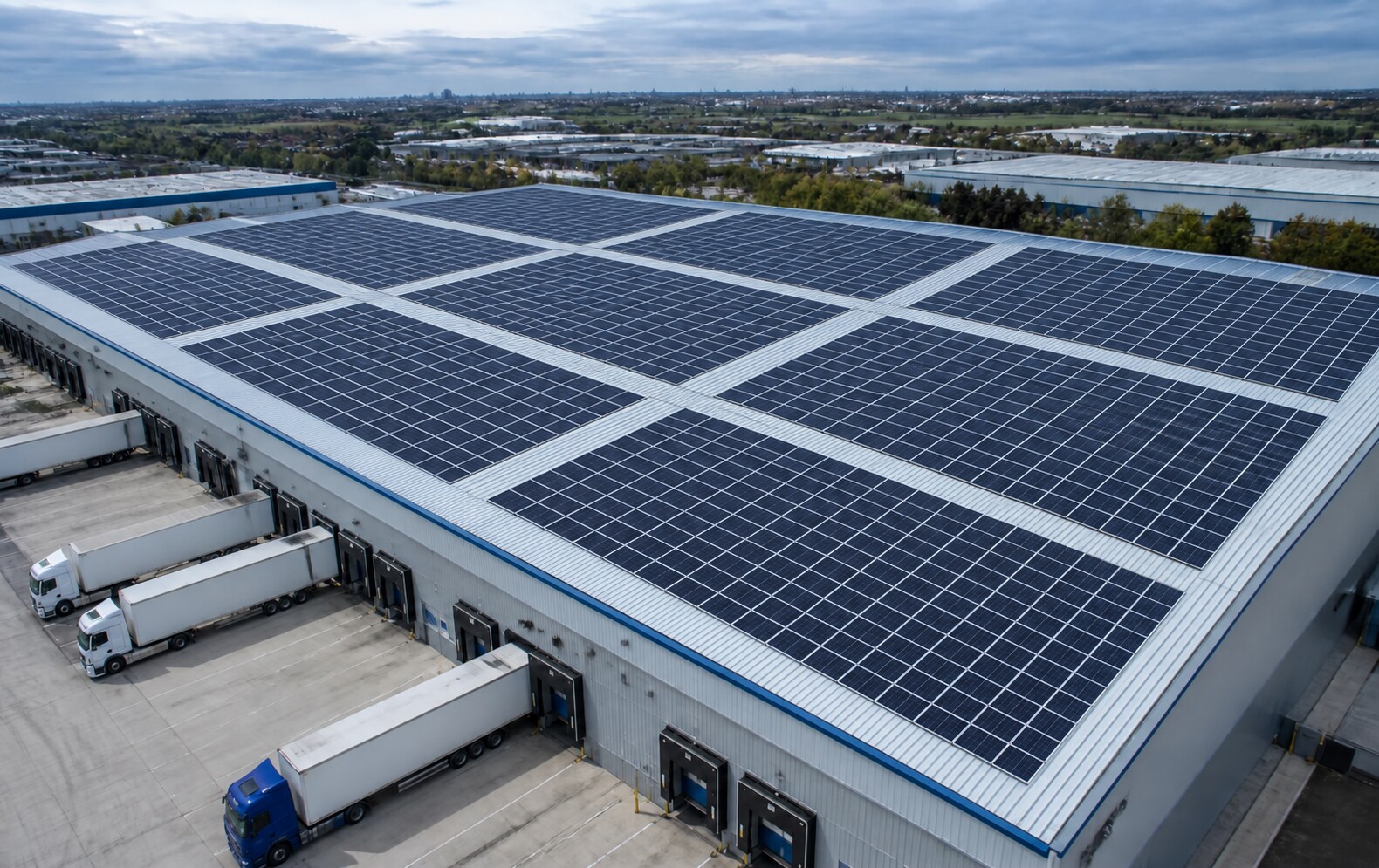
Large uninterrupted roof area and steady daytime load — usually the strongest commercial case.
Manufacturing
High daytime consumption means a very high self-consumption rate and fast payback.
Retail & hospitality
Daytime trading hours align well with generation; refrigeration adds a steady base load.
Agriculture
Barn and shed roofs, plus ground-mount options where land use allows.
Offices & education
Predictable weekday profile; strong reporting value for ESG disclosure.
Care & healthcare
24/7 operation and resilience requirements make storage a natural companion.
Paying for it
Three ways to pay for it
The right route depends on your balance sheet, your lease length and how you treat capital projects.
Capital purchase
You fund it, you own it, you keep every unit generated. Highest lifetime return, highest upfront commitment.
Asset finance / lease
Spreads the cost over the asset's early life. Terms and rates depend on the funder and your covenant strength.
Power Purchase Agreement
A third party funds and owns the system; you buy the generated power at an agreed rate. No capital outlay.
FAQs
Commercial questions
Send us twelve months of half-hourly data
That single file tells us more than any site visit. We'll model the opportunity and come back with a realistic assessment.
Typical enquiry takes under two minutes · We never sell your details on